What this Toronto pest control page can establish
Toronto rat control for burrows, droppings, routes and property entry risks starts with observations that can be checked: what was seen, where it appeared, when activity occurs and which property conditions may support it. A website description or photograph can narrow questions, but it cannot confirm species, severity, exposure, a pesticide choice or a complete treatment plan. Identification and site evidence stay separate from assumptions.
This page organizes the requested inspection scope for rat activity assessment. It shows which records help a qualified reviewer and which claims remain gated. Nothing here confirms an appointment, licence, product, method, price, guarantee, occupant-safety outcome or re-entry time. Those details must come from the verified operator and the label or lawful instructions applicable to the actual site.
Pest evidence to record before a Toronto inspection
Photograph evidence in context and close-up when it is safe to do so. Record the exact room or exterior zone, surface, height, first-observed date, frequency and time of day. Note insects, droppings, cast skins, damage, trails, nests, odours or sounds without touching unknown material or blocking an active route.
Keep a specimen only when it can be collected safely in a sealed container. Do not rely on bites, a sound in a wall or one blurred image as species proof. Avoid cleaning away every sign before the inspection unless there is an immediate sanitation need; a useful evidence map helps the inspector decide where to examine next.
Property, occupant and access information
Toronto rat control for burrows, droppings, routes and property entry risks can change materially between a detached house, condo, apartment, restaurant or office. State who owns, occupies and manages the property; which areas the requester can authorize access to; and whether connected units, common elements, tenants, staff or a landlord may need coordination.
List children, pets, pregnancy, respiratory sensitivities, mobility needs, food-handling areas and any other occupancy condition for the operator to review. This is not a claim that a method is safe or unsafe. It is information the licensed decision-maker needs before selecting lawful products, preparation, personal protection, access or re-entry instructions.
Entry points, harbourage and contributing conditions
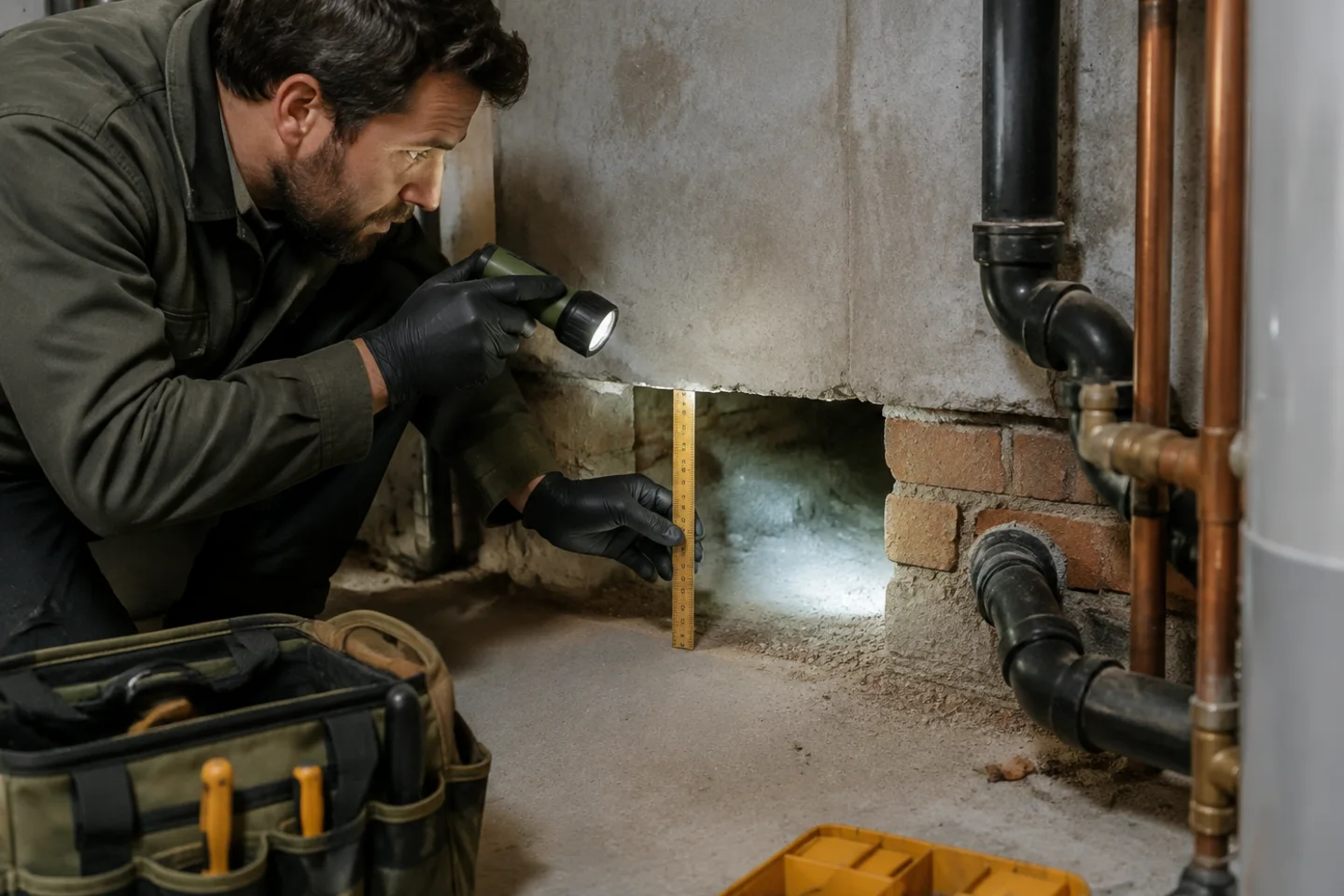
Inspection should connect the observed pest with possible shelter, moisture, food and travel routes. Describe plumbing penetrations, foundation gaps, door sweeps, roofline openings, wall voids, storage density, drains, waste areas, vegetation and shared service routes that are relevant to the evidence.
An opening is not automatically the active entry point, and sealing without understanding activity can redirect movement or hide evidence. Exclusion belongs in a documented sequence: inspect both sides, select materials suitable for the structure, coordinate repairs and use monitoring to check whether the route assumption was correct.
Identification changes the pest control plan
Species and life stage influence where an inspector looks, what monitoring means and which lawful options may be considered. Similar signs can come from different insects, rodents, wildlife or non-pest building conditions. A responsible request leaves room for the evidence to disprove the customer’s first guess.
The treatment class, device, pesticide, exclusion step or referral must follow confirmed capability and authorization. This staging site does not recommend products, mixtures or do-it-yourself exposure instructions. Only the licensed operator approves preparation, application, ventilation, re-entry, disposal and follow-up language for a real service.
Preparation instructions must match the approved method
Do not begin extensive disposal, laundering, furniture movement or food-area preparation from a generic webpage. Premature disturbance can spread activity, remove evidence, create unnecessary cost or conflict with the selected approach. Preserve the baseline and make inspection zones reasonably accessible.
When a method is approved, the customer should receive clear written preparation tasks: which rooms, objects and occupants are affected; what must be moved, sealed or left in place; when access is needed; and who answers questions. If instructions change, the revised version should be dated and shared with every responsible occupant or property contact.
Ontario licence and treatment claim gates
Ontario regulates pesticide sale, storage, use, transport and disposal. Unless an exemption applies, commercial pesticide application on property the applicator or employer does not own requires an appropriate exterminator licence, and operating a pesticide extermination business may require an operator licence. Verify the current licence class and conditions directly.
The production website must not publish a licence number, insurance claim, product list, guarantee, response time, “non-toxic” wording or children-and-pets safety statement until documentary evidence and precise terms are supplied. Wildlife work also requires species, season, legal authority and subcontractor relationships to be checked before it appears as an available service.
Monitoring and follow-up for this pest concern
Follow-up compares new evidence with the original map. Record device locations, inspection dates, sightings, captures or other approved indicators in the same way each time. A single observation immediately after work does not by itself prove success or failure; interpretation depends on the pest, method and operator’s documented review interval.
Reassess when activity appears in a new zone, the evidence conflicts with the identification, preparation was incomplete, connected units remain untreated or exclusion changed the route. The next step may be continued monitoring, a revised inspection, property repair, coordinated access or another approved method—not an automatic repeat of the first treatment.
Inspection request checklist for rat activity assessment
A review-ready request includes Burrow or dropping locations; Exterior food and harbourage; and Entry routes and neighbouring conditions. Add the Toronto postal code or nearest intersection, property type, requester role, affected rooms, first-observed date, activity timing, occupants or pets, prior products or services and any neighbouring-unit concern.
Submitting the evidence creates a request for review only. It is not a diagnosis, emergency service, booking, quote, treatment approval or promise of availability. Do not send payment data, identity documents, alarm codes or unsafe samples. The operator must verify scope, licences, method, preparation, price and follow-up in its actual commercial process.